
Cabinet Store · 3227 NY-22 · Patterson, NY
Eco-Friendly and Sustainable Kitchen Cabinets
Described by their materials and construction, not by labels we do not hold. See the woods and finishes in person at the showroom.
What people are actually asking about.
When people ask about eco-friendly cabinets, they are usually asking about two different things at once, and it helps to separate them. One is where the wood came from. The other is what the finishes and the glues give off indoors, in a closed room, after the cabinets are in.
They are unrelated concerns, and a cabinet can be good on one and not the other. We will talk about both, plainly, because the word “eco-friendly” gets used to cover both and it should not.
Materials.
A cabinet is three things: the door, the face frame if there is one, and the box. The box is where most of the material is, and it is where most of the questions are. Solid wood is one option — durable, repairable, and it moves with humidity, which is a strength and a weakness. Plywood is layers of wood glued at right angles; it is stable and holds up well over time.
A particle core is wood particles bound with resin, faced with a veneer; it is the most common box material and the one people often want to know about. Bamboo is a fast-growing option some lines offer. Reclaimed and salvaged wood — taken from old buildings or fallen trees — is available in some lines for people who want material with a history.
We can tell you which lines use which. None of this is rated against a standard here; it is described so you can ask the right questions.
Finishes.
The finish is what is on the surface, and the difference that matters to most people is water-based versus solvent-based. A solvent-based finish has been the default for a long time; it is durable and it has a smell in a closed room for the first weeks after the cabinets go in.
A water-based finish gives off less of that smell and has improved a lot, though some people feel it is slightly less hard. We are not going to put a number on what either one gives off. What we can tell you is which finish a given line uses and what to expect in the first few weeks — whether the kitchen will smell, and for how long. That is the question that actually matters when the cabinets are new.
The honest part.
“Eco-friendly” is a loosely used word in cabinetry. It gets printed on brochures more often than it gets explained, and a cabinet sold as green may have a wood door on a box that is something else entirely.
The honest thing to do is ask any supplier what the box is actually made of, what the finish is, and what it gives off when new — and to trust the ones who answer plainly. We will tell you exactly what a given line is built from, finish and box, because that is the only answer worth giving. If a line is built in a way you like, we will say so; if it is not, we will say that too. That honesty is the point of this page.
Built to last is the greenest thing.
The most sustainable kitchen is the one that does not get replaced. A kitchen torn out in eight years is the real waste — the materials, the finish, the truck, the landfill. Cabinets that are built well and fitted right last decades, and a box that holds up matters more to that than a label on the door. Buy once, fit it well, and let it stay.
Natural materials, in real kitchens.
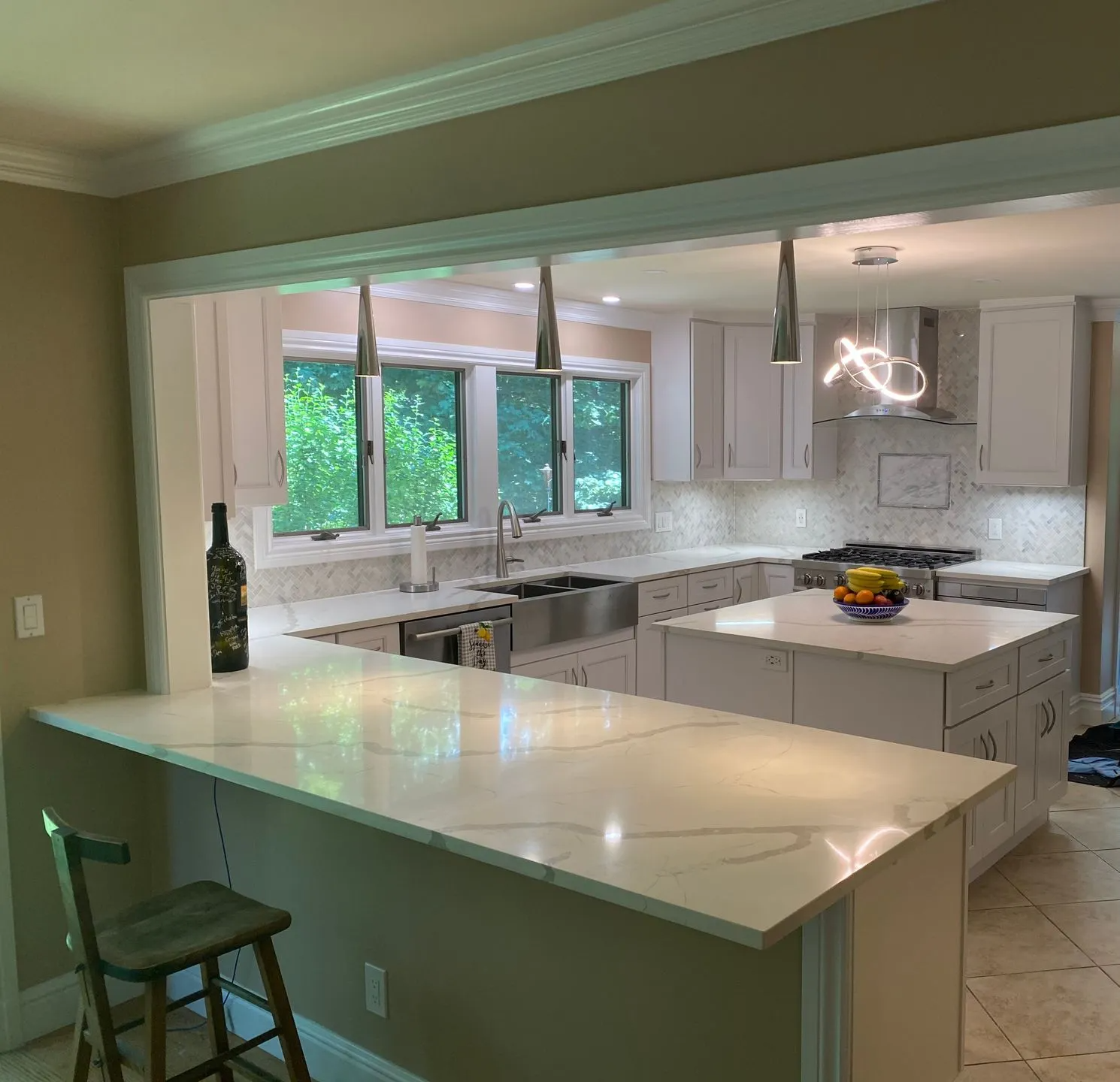
Solid wood, natural grain and water-based finishes from our showroom displays.
Natural wood grain cabinetry with clean contemporary lines
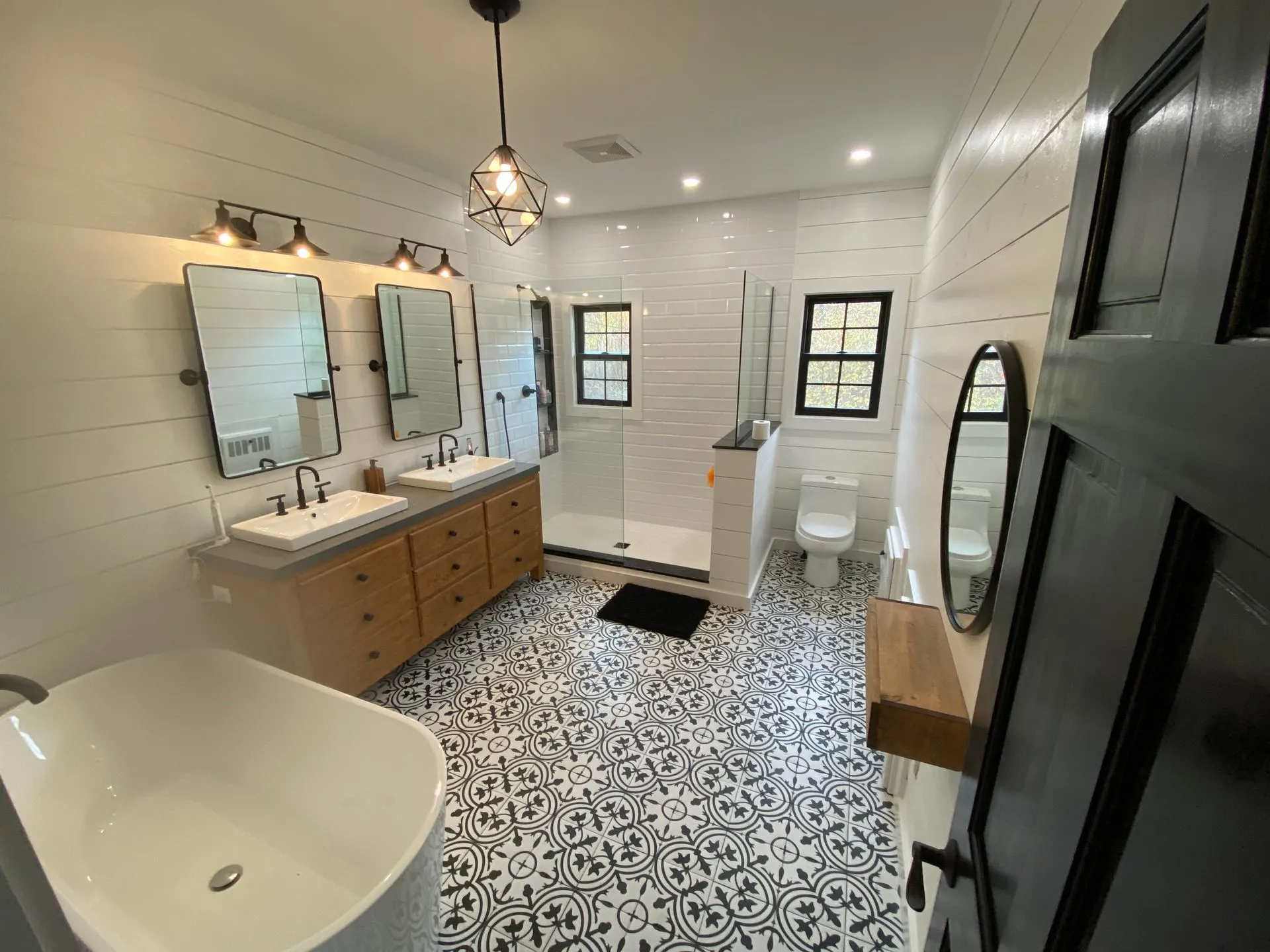
Custom storage configuration with natural wood grain finishes
Questions people ask about eco-friendly cabinets.
The other style families.
Walk-ins welcome — no appointment needed.