
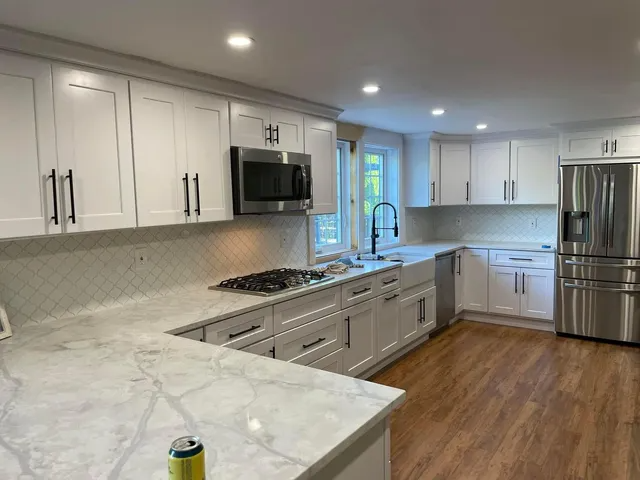
Cabinet Store · 3227 NY-22 · Patterson, NY
Traditional and Classic Kitchen Cabinets
Raised panels, crown moulding, inset doors. The look that agrees with an older house instead of arguing with it. Cabinets start at $3,000.
Who picks this, and why it is the most common choice around here.
This part of New York is full of pre-war and mid-century houses — colonials, capes, farmhouses, village houses built when a kitchen was meant to look like it belonged to the house. A flat modern slab door dropped into a 1930s colonial fights the room. The trim is different, the proportions are different, the whole house is doing something else. Traditional cabinetry is the choice that agrees with the house instead of arguing with it.
That is why it is the most common thing people walk out of the showroom having picked, especially in and around the older towns of Putnam and northern Westchester. It is not the only choice — we sell all five style families — but it is the one that fits the housing stock here without anyone having to think too hard about it.
What it looks like.
Raised-panel doors, where the center panel sits proud of the frame, and recessed-panel doors, where it sits back. Framed construction — the cabinet has a face frame, and the doors hinge to it. Inset doors, where the door sits flush inside the frame rather than overlapping it.
The details that make a kitchen read as traditional: crown moulding at the top, a light rail that hides the under-cabinet lighting, furniture-style toe kicks instead of a plain recess, glass mullion doors over the sink or on a few uppers, and beaded face frames that put a fine groove along the inside edge. None of this is required — you pick the details you want — but these are the moves that make a kitchen look like it has always been there.
Inset versus overlay — the thing nobody explains.
There are two ways a door meets a frame, and the difference changes both the look and the price. Inset is the older, costlier, more exacting method: the door sits inside the frame with a hairline reveal all around, flush with the face. Because wood moves with humidity, an inset door has to be built tight enough to clear the frame in summer and not gap in winter. That takes more time and more care, and it costs more.
Overlay is the other method: the door sits on top of the frame and covers the opening. It is simpler, it costs less, and it is what most traditional kitchens actually use. You can get a traditional look either way. The question is how much the flush, furniture-like detail of inset is worth to you.
Finishes.
Painted, stained, and glazed or distressed. Painted white and off-white are the most ordered traditional finishes we sell — by a fair margin — so say so rather than pretending every finish is equally popular. Stain shows the wood grain and reads warmer; glaze and distress add age and depth for people who want the kitchen to look settled from day one.
Hold the samples in the showroom light. A finish that looks right on a screen often reads differently in your hand, and differently again next to your countertop. Two racks of quartz samples sit in the same room, so you can carry a finish and a countertop sample around the displays together.
What it costs.
Cabinets start at $3,000. Traditional costs more than a flat slab for the same kitchen, and the reason is straightforward: more doors, more frame, more moulding, more detail to build. Raised panels and crown moulding are labor. Inset adds more still. You control the number by choosing where the detail goes — full traditional everywhere, or traditional doors with simpler trim.
Like everything we sell, these are sold and delivered — you hire your own installer, so the cabinet price is the cabinet price, separate from the labor.
What moves the number, in detail →Traditional and classic, in real kitchens.
Raised panel doors, painted finishes and crown detail from our showroom displays and completed orders.
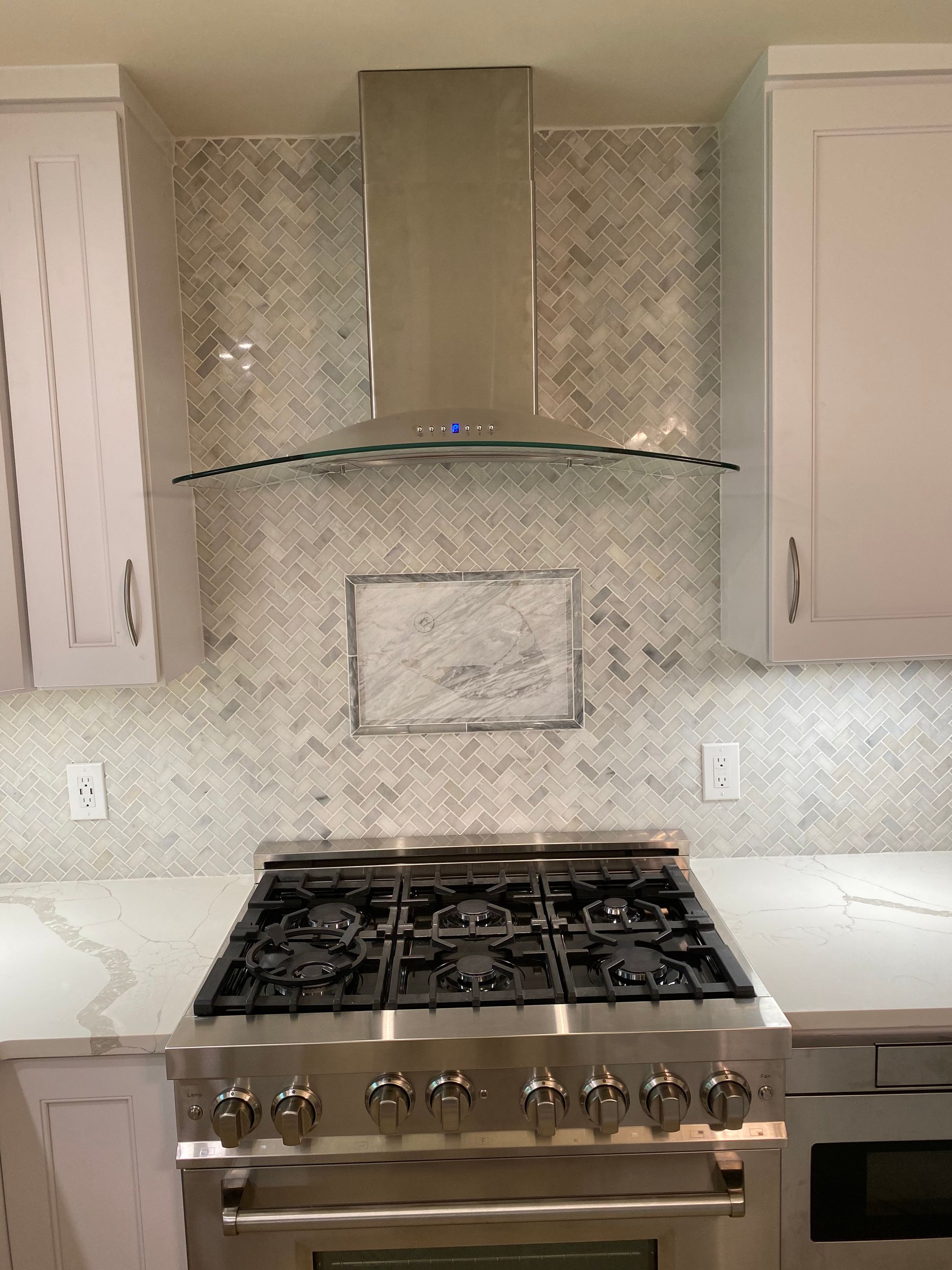
Custom range alcove with marble-patterned quartz backsplashes
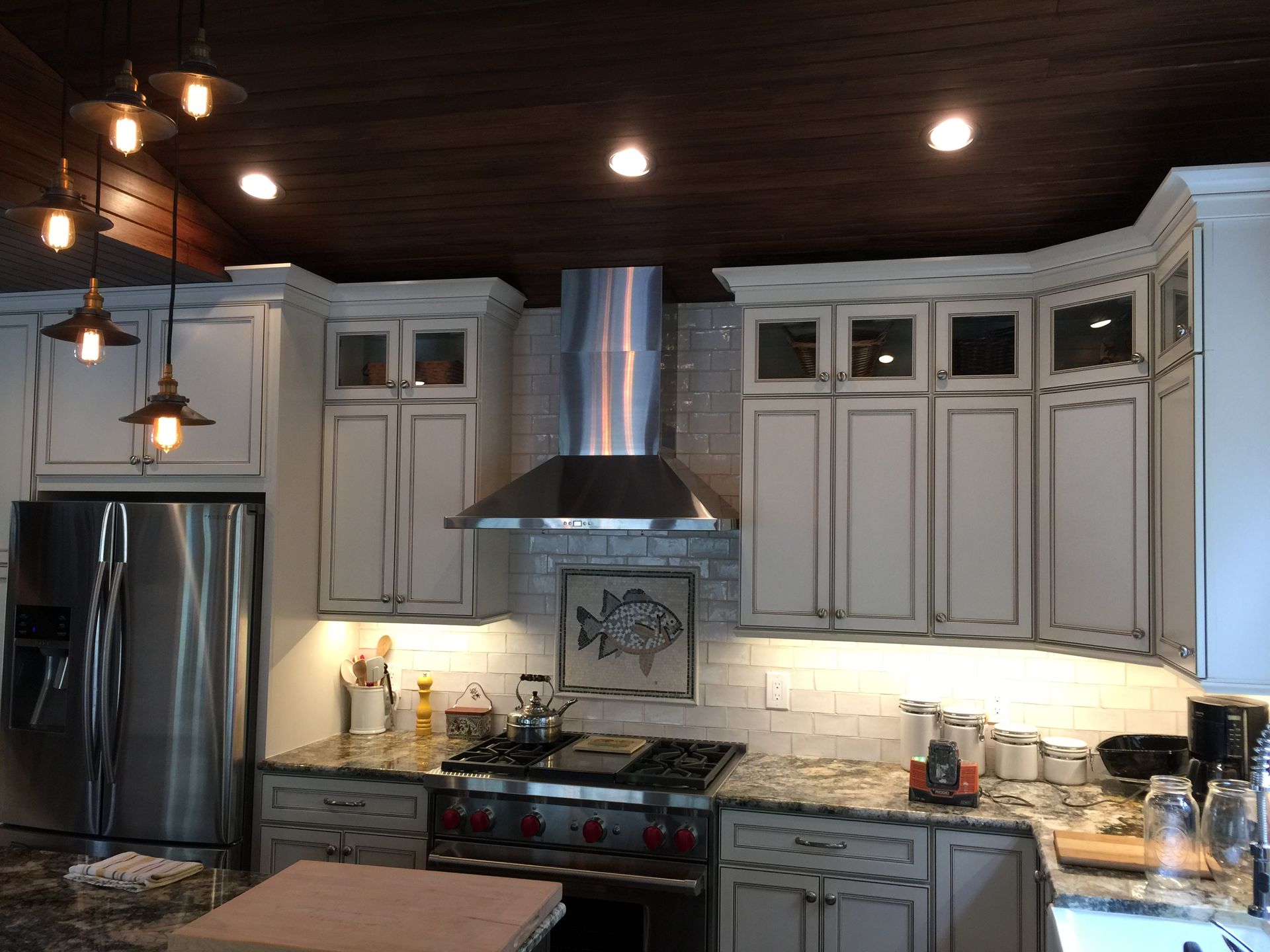
Transitional grey cabinets paired with rich timber ceiling details
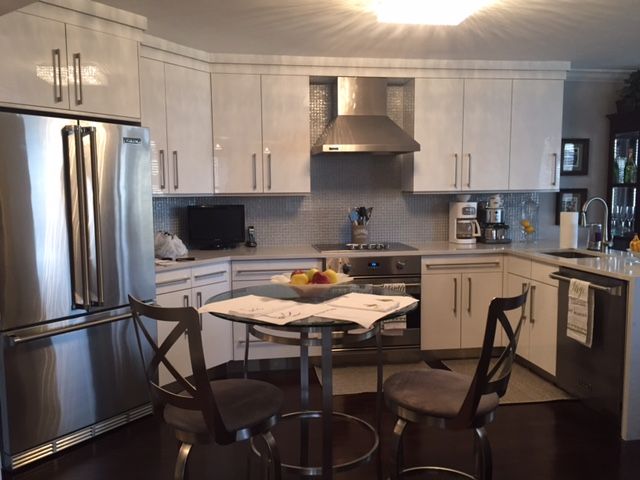
Classic white cabinetry design tailored for a bright family dining space
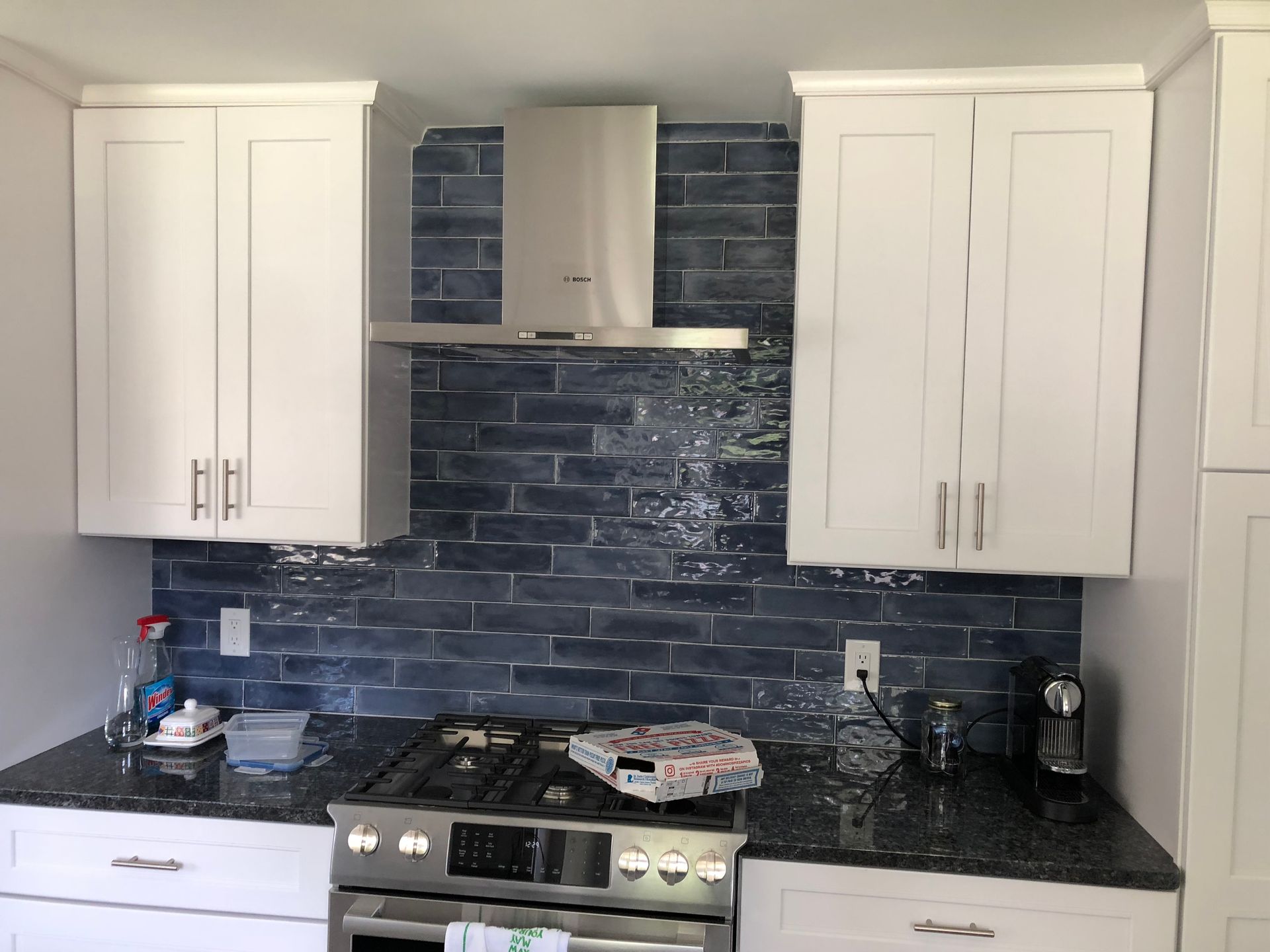
Contrast design with vibrant blue tile backsplash and crisp white uppers
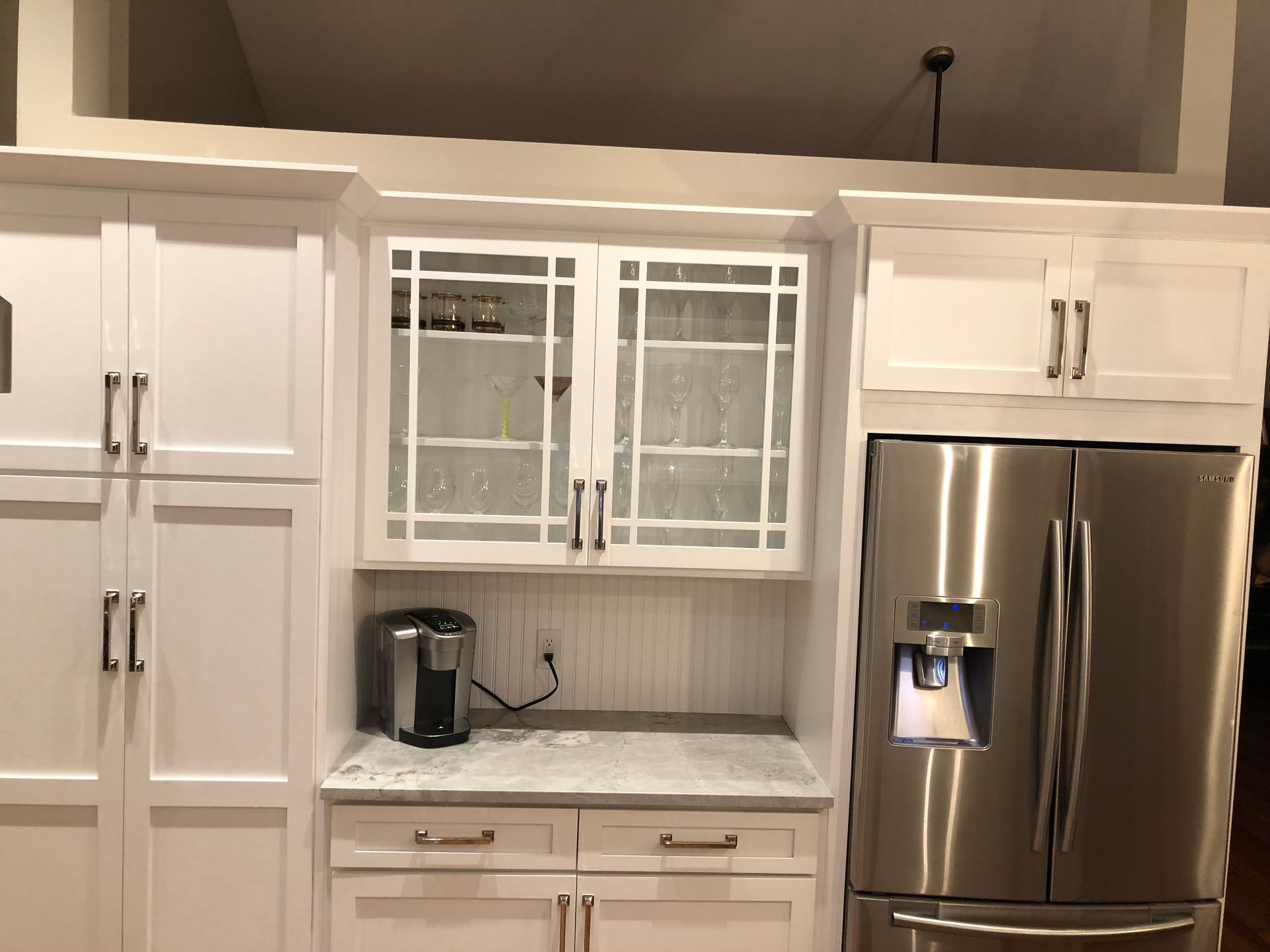
Mullion glass-door uppers for display and coffee station nook
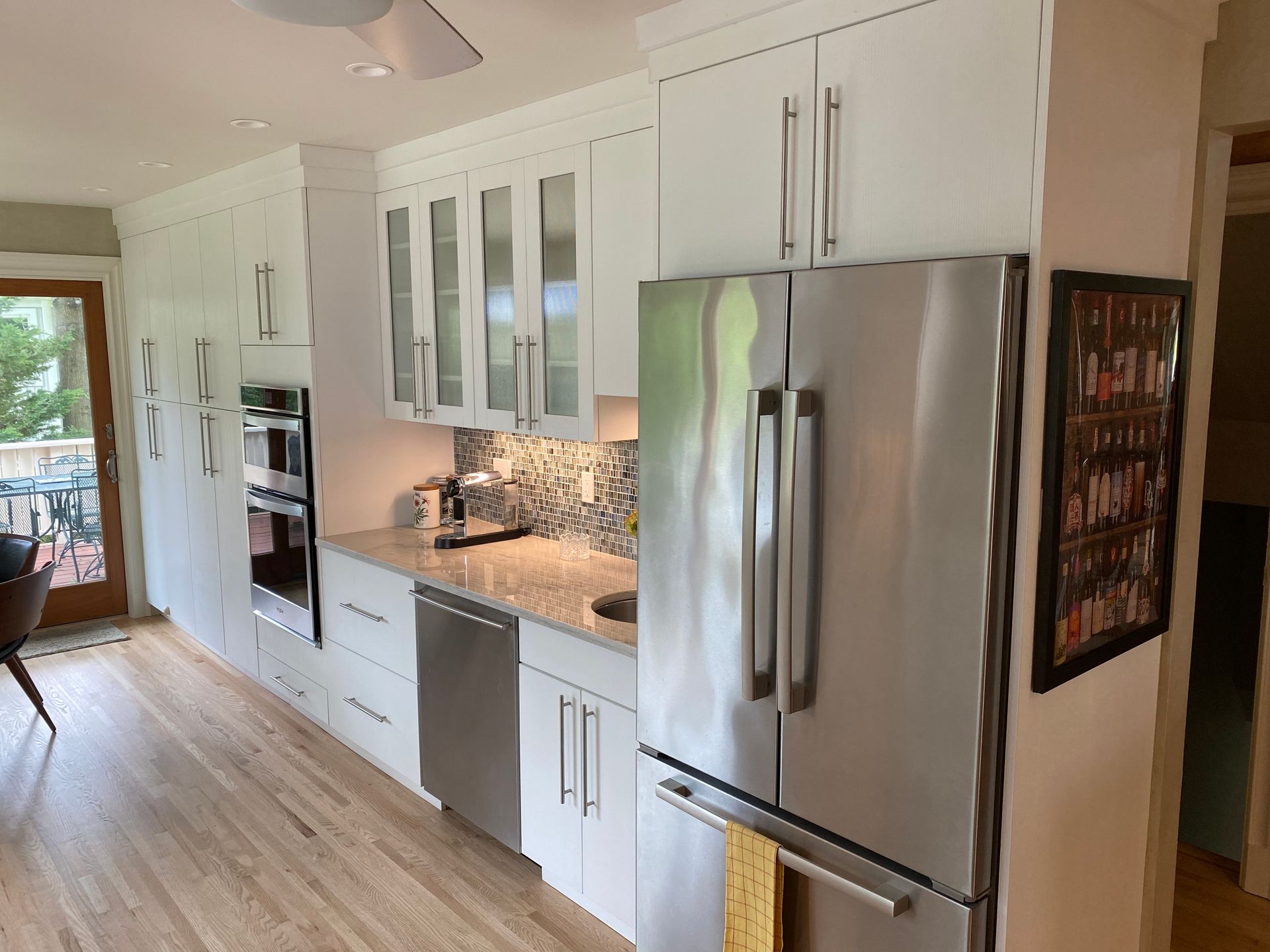
Built-in appliance panels and integrated storage surrounds
Questions people ask about traditional.
The other style families.
Walk-ins welcome — no appointment needed.