
Cabinet Store · 3227 NY-22 · Patterson, NY
Transitional Kitchen Cabinets
The middle ground. Shaker doors, neutral paints, a kitchen that reads as neither strictly modern nor fully traditional. Cabinets start at $3,000.
What transitional actually means, because the word is used loosely.
“Transitional” gets used loosely, so let’s be clear about what it means here. It is the middle ground between modern and traditional. You get clean lines without the hard, flat edges of a modern slab, and you get some detail without the crown moulding and raised panels of a traditional kitchen. The door at the center of nearly every transitional kitchen is the Shaker — a flat recessed panel inside a simple frame.
Transitional is less a style of its own than a balance point, and the Shaker door is what holds it there. If you cannot decide between modern and traditional, this is usually where you land, and it is a good place to land.
Why the Shaker door won.
A Shaker door is a square frame with a flat center panel set into it. That is the whole door. There is no raised panel, no ornate edge, no curve. The plainness is exactly why it works everywhere: it suits a 1920s colonial and a 2015 build equally, and it does not announce what decade you remodeled.
That versatility is why it became the most-ordered cabinet door in the country, and why it has stayed there. You can dress a Shaker up with moulding and it reads traditional. You can strip the hardware back and it reads modern. Most of the time, in most kitchens, it just reads right.
What it looks like in a room.
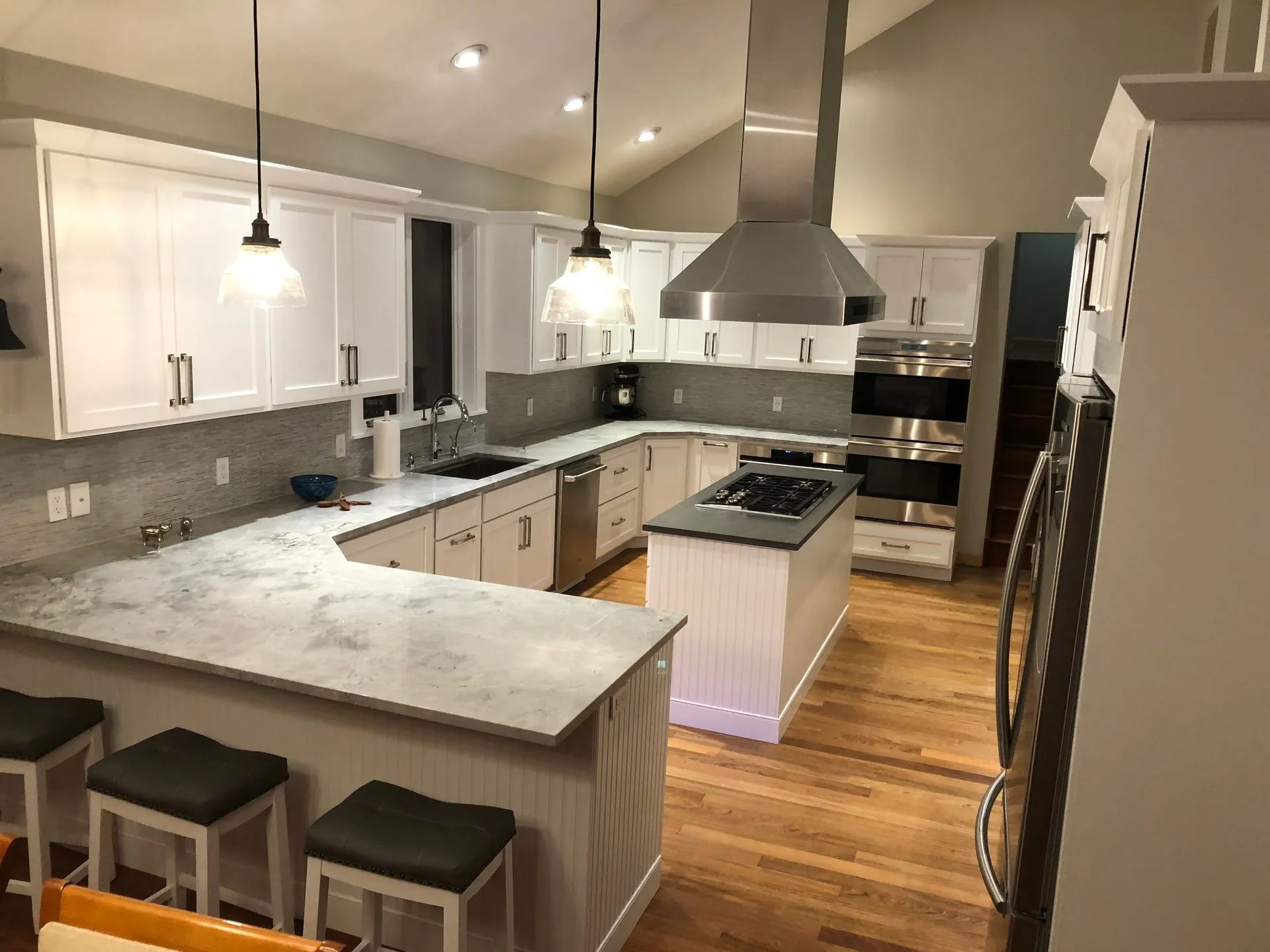
Shaker doors on the perimeter. Simple crown moulding, or none at all — a flat top is common and reads cleaner. Bar pulls instead of knobs, usually in a brushed nickel or a matte black. Painted finishes in neutrals: white, off-white, gray, sage, greige. And very often a contrasting island — the same Shaker door in a second color, which is one of the signatures of a transitional kitchen.
The overall room reads calm and uncluttered without being bare. Nothing shouts, but nothing is missing either.
Who picks it.
Two groups, mostly. The first is people who plan to stay in the house and want a kitchen that will not look dated in twelve years. The second is people who plan to sell in five and want a kitchen a buyer will not argue with.
Transitional is the safe choice for both, and that is not a criticism — a kitchen that ages well and appeals broadly is worth picking on purpose. If you are not sure what you want, this is the default, and defaults are defaults for a reason.
What it costs.
Cabinets start at $3,000. Transitional sits in the middle of the range for a reason: a Shaker door is simpler to build than a raised-panel traditional door with all its moulding, but it has more to it than a flat slab. You are paying for a recessed panel and a frame, which is real work, but not for the detail that pushes traditional higher.
A contrasting island in a second color adds a little; staying in one color keeps the number down. We deliver within 25 miles, about two weeks from order. Like everything we sell, these are sold and delivered — you hire your own installer, so the cabinet price is the cabinet price.
What moves the number, in detail →Transitional and Shaker, in real kitchens.
Shaker doors and neutral painted finishes from our showroom displays and completed orders.
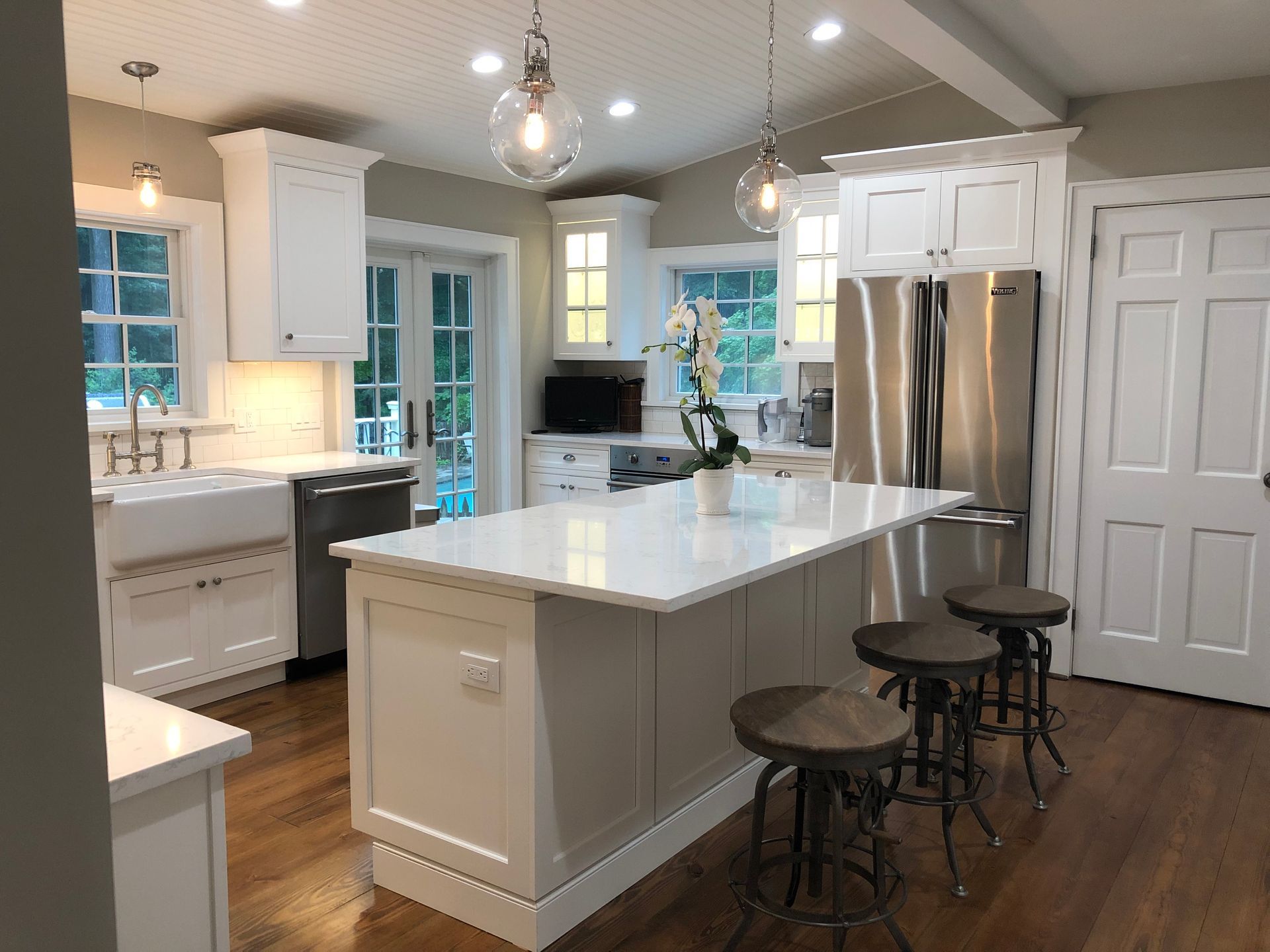
Custom white island with quartz countertop and built-in drawer storage
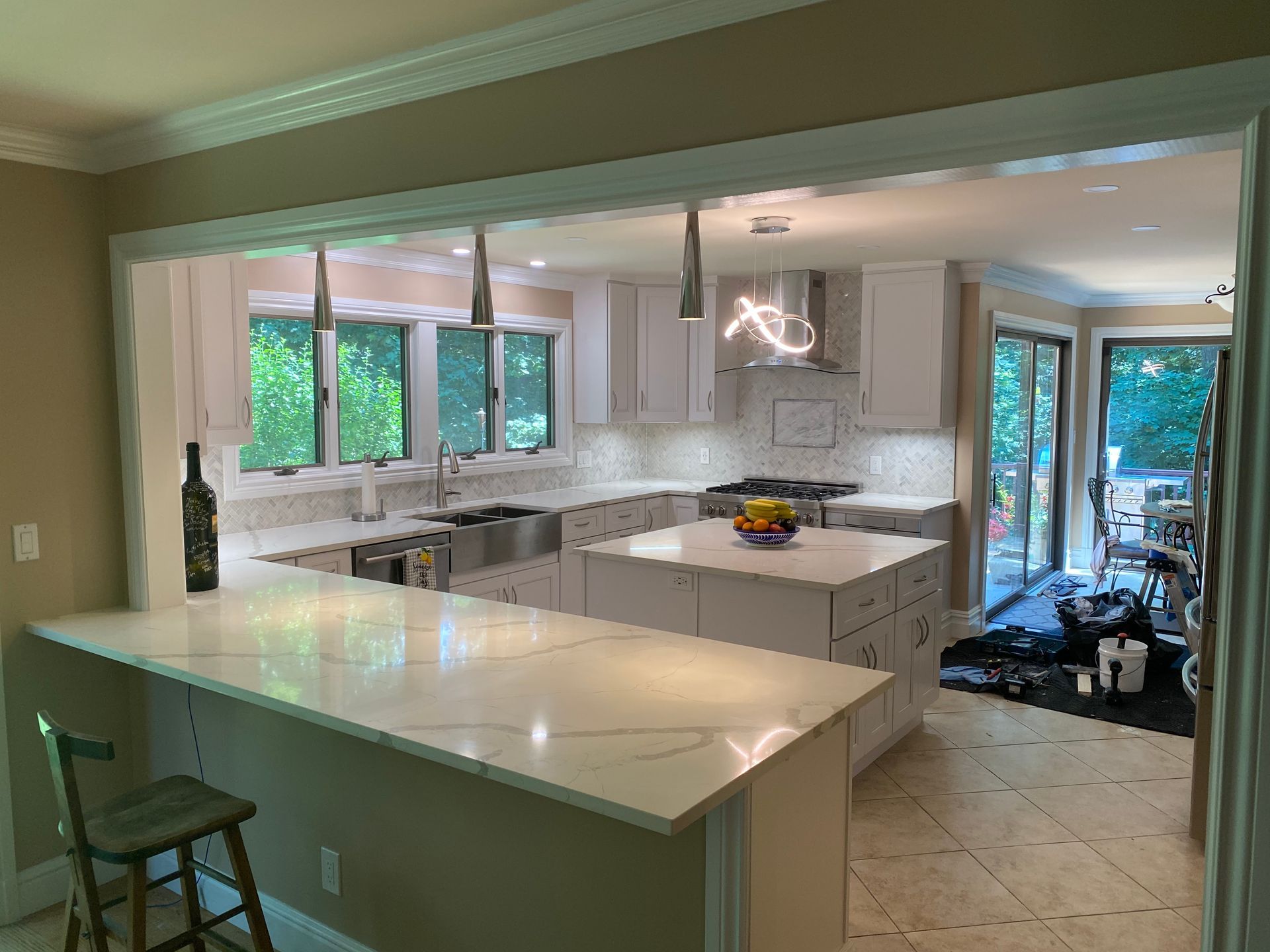
Open-concept layout featuring perimeter cabinetry and waterfall island
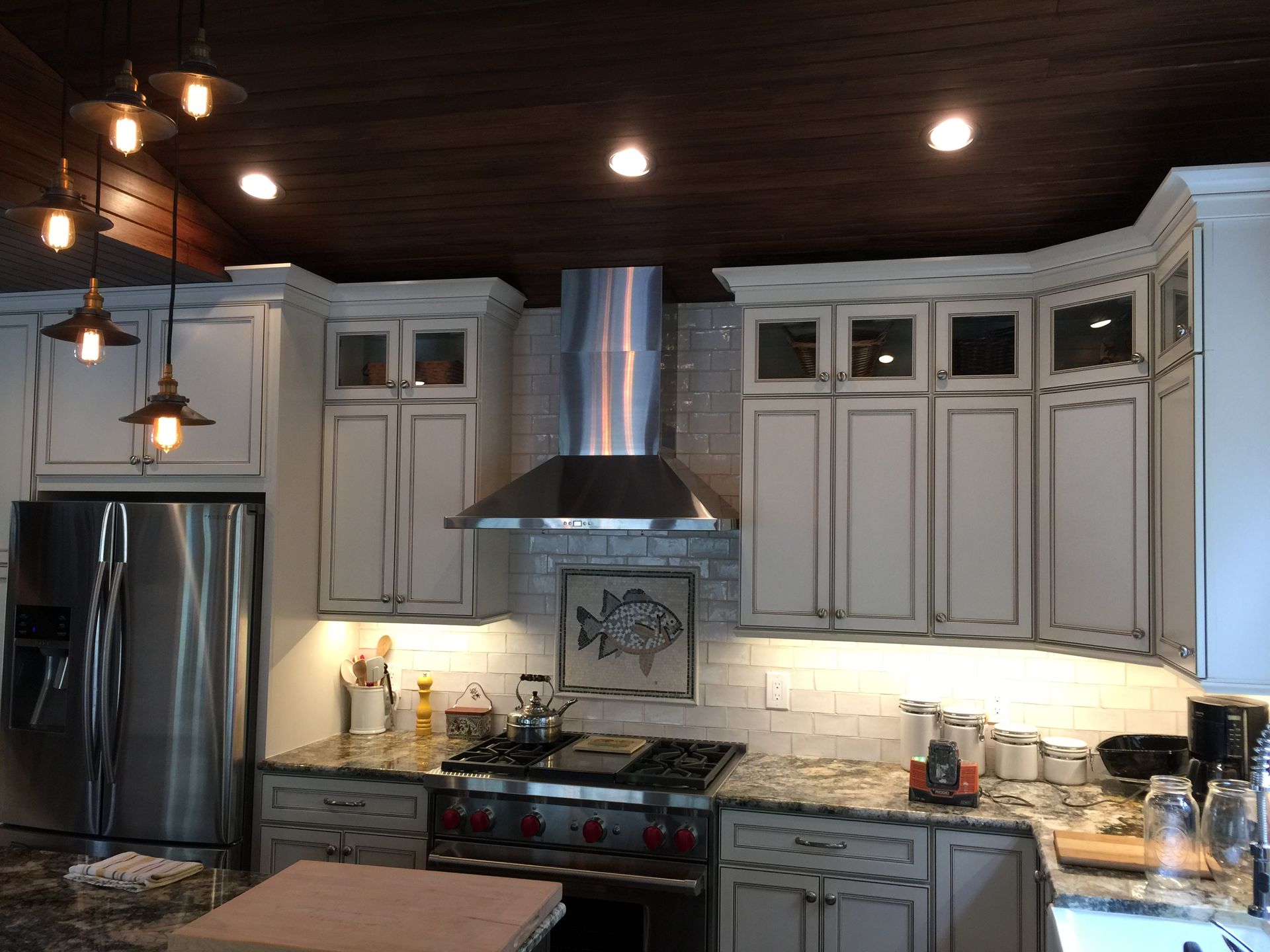
Transitional grey cabinets paired with rich timber ceiling details
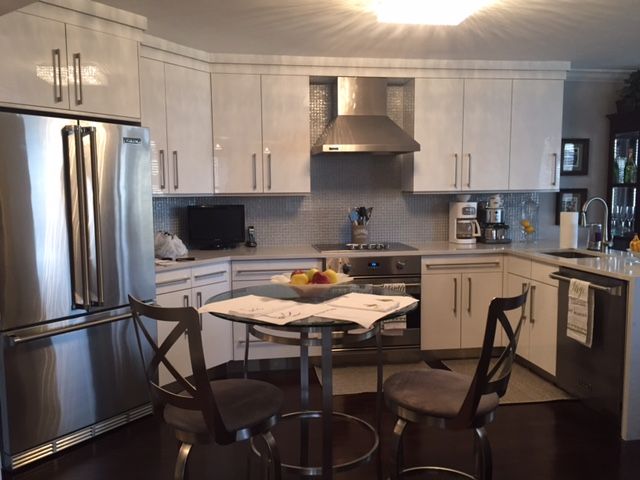
Classic white cabinetry design tailored for a bright family dining space
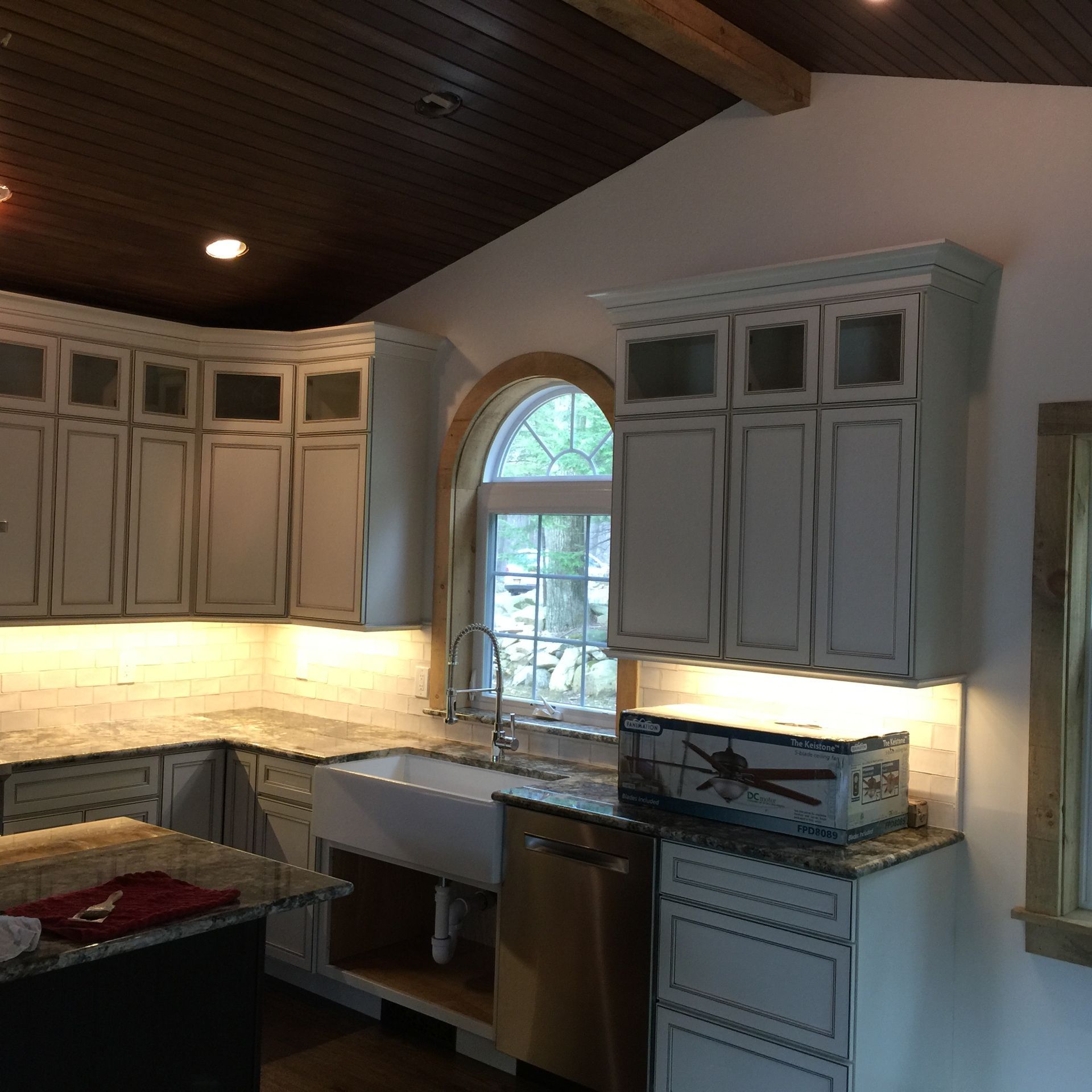
Recessed panel grey cabinetry with precision LED task lighting
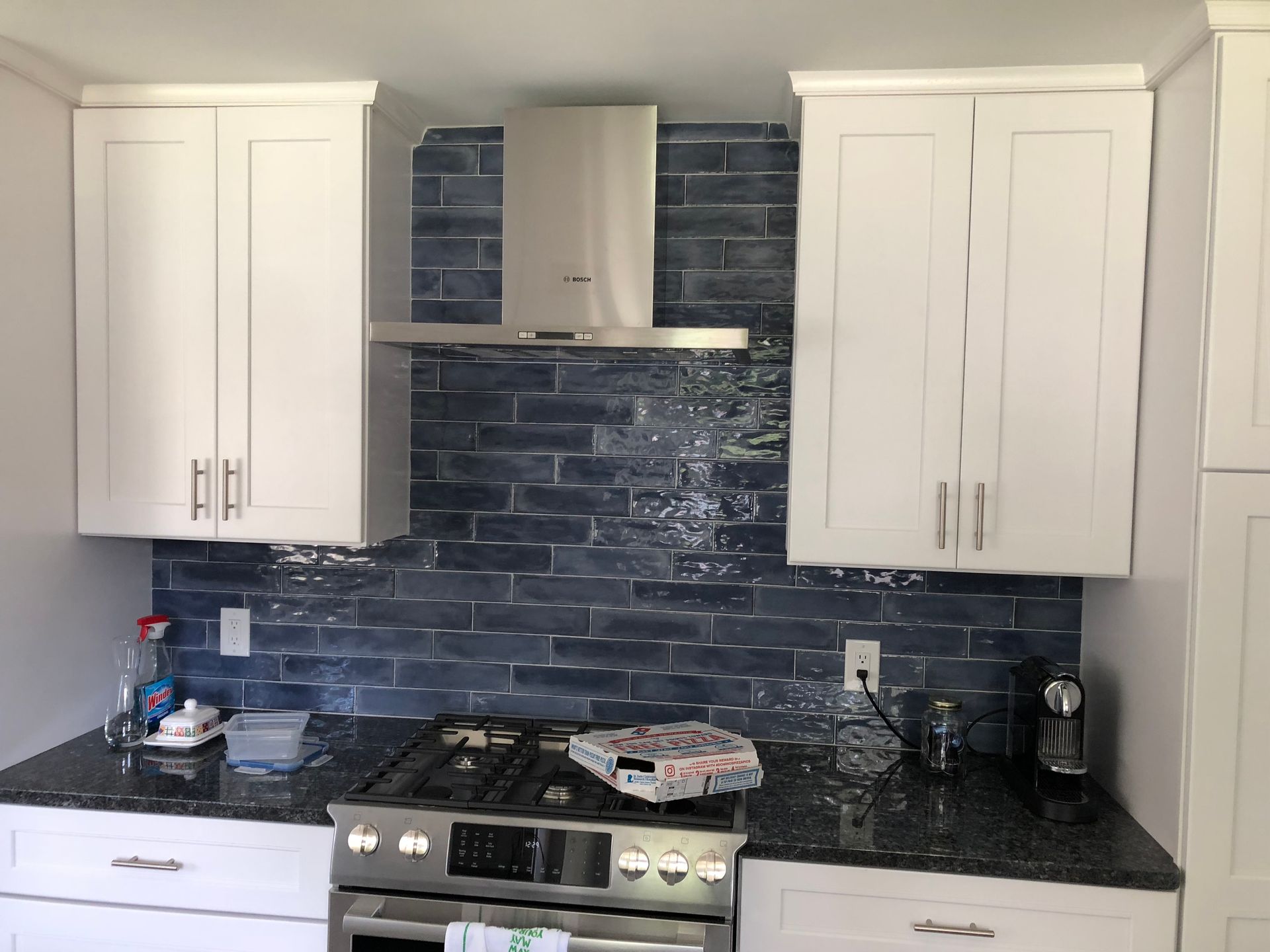
Contrast design with vibrant blue tile backsplash and crisp white uppers
Questions people ask about transitional.
The other style families.
Walk-ins welcome — no appointment needed.